 Packetbrew
Software Defined Networking (SDN): What It Is and Why It Matters
Previously, we covered the different types of networks. But there’s another network architecture that’s become foundational to how modern infrastructure runs — and it’s called Software Defined Networking, or SDN.
As the name suggests, SDN is a network that’s defined by software. In this post, we’ll break down what it does, how it works, and how it can help you — whether you’re managing a small lab or a hyperscale data center.
Let’s dive in.
The Problem: Managing Networks One Device at a Time
Let’s say you’re building a network with 100 devices that all need similar, repetitive configurations. Are you still doing that one device at a time? And once it’s deployed, do you have a plan for maintaining it when something breaks?
This is exactly the problem SDN was built to solve.
SDN provides a single pane of glass to manage all your network devices — for both configuration and monitoring. Instead of logging into device after device, you manage your entire network from one centralized point.
The Core Idea: Separating Control from Data
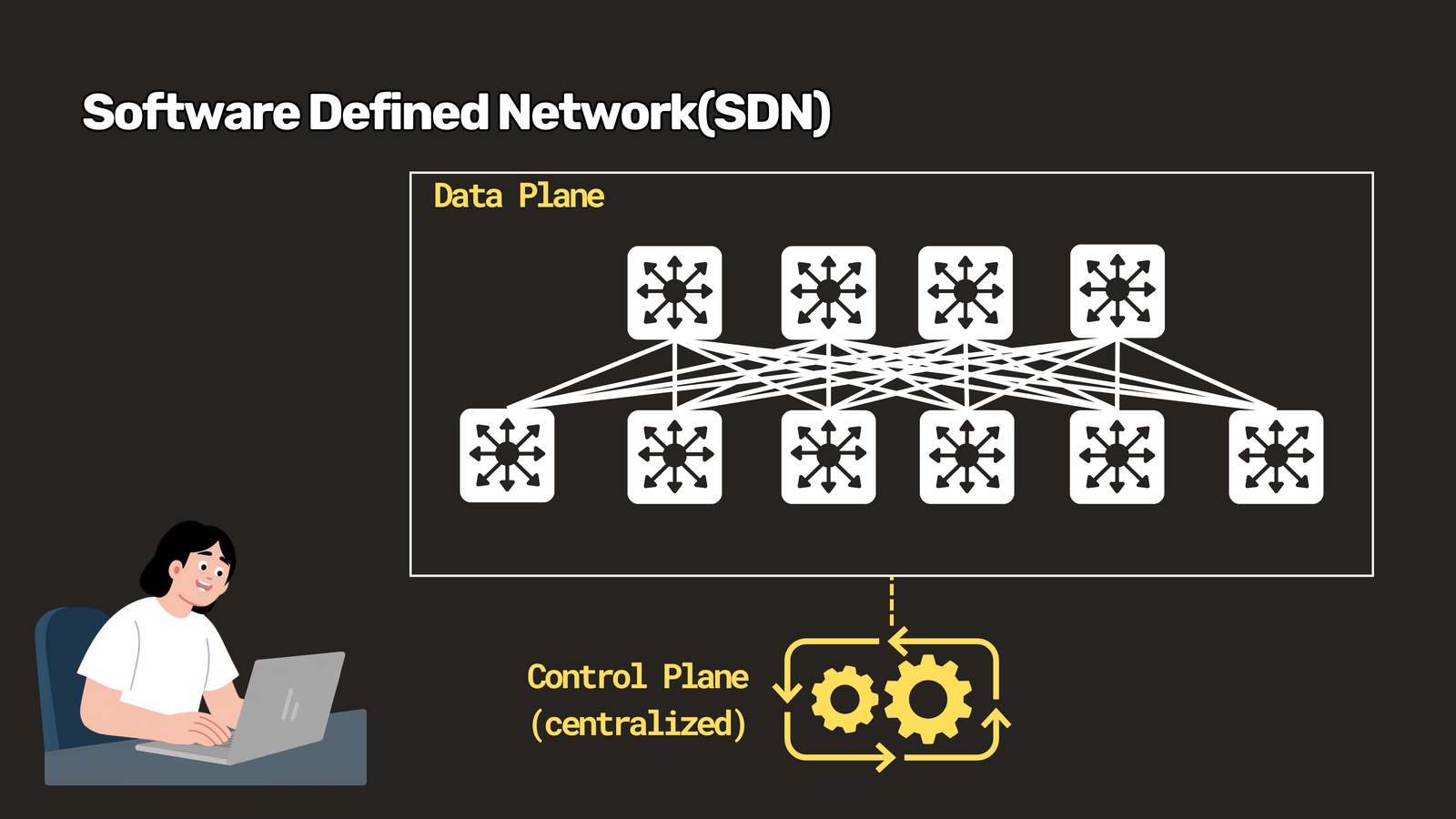
The core concept behind SDN is simple: centralize the control plane in software, and separate it from the data plane.
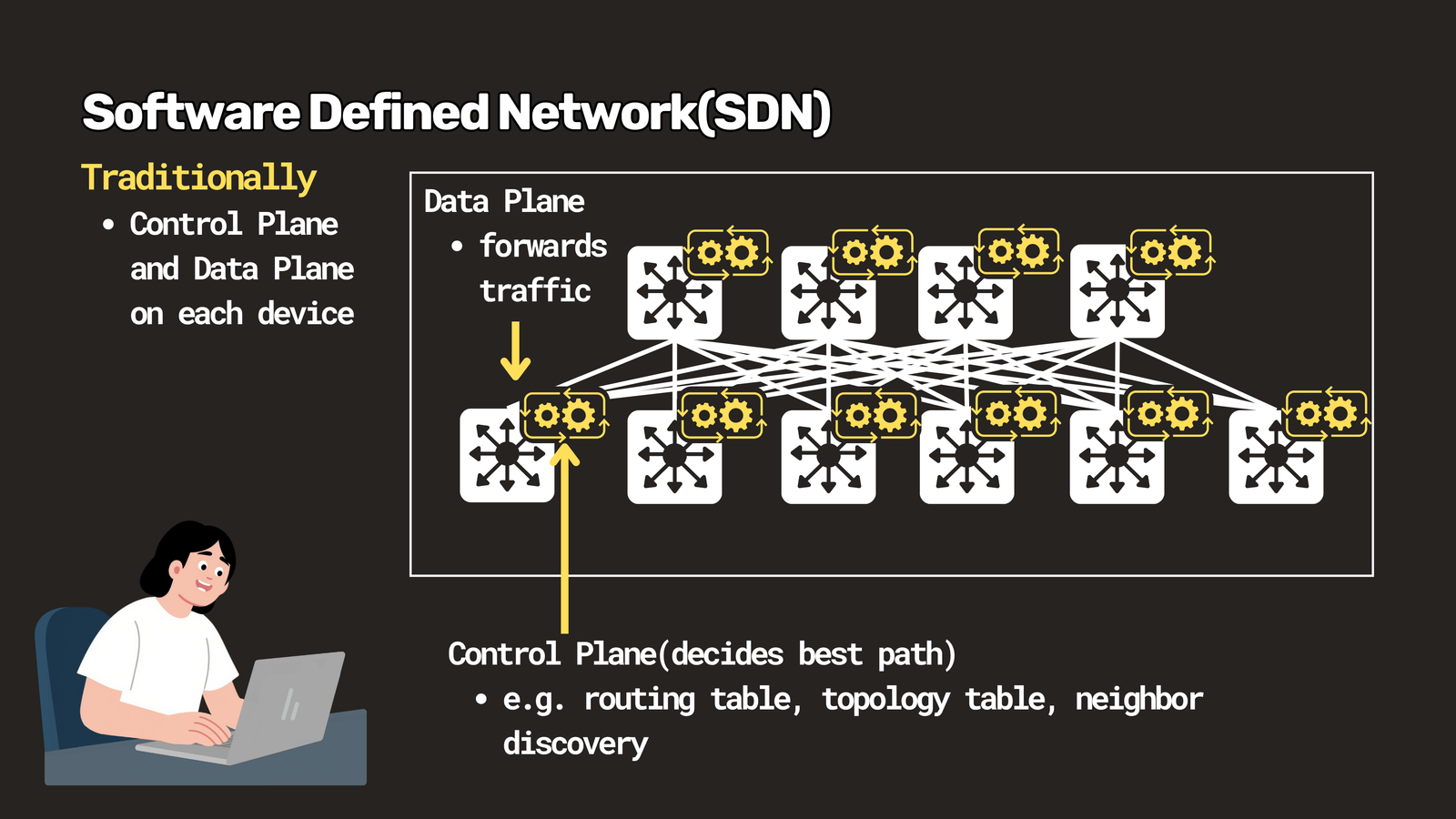
Traditionally, every network device — every router, every switch — has its own control plane and its own data plane bundled together:
- The control plane decides where traffic should go
- The data plane actually forwards that traffic
SDN breaks this coupling apart. It consolidates all control plane decision-making into a centralized controller, which then directs how each device forwards traffic as it moves through the network.
The Three Layers of SDN
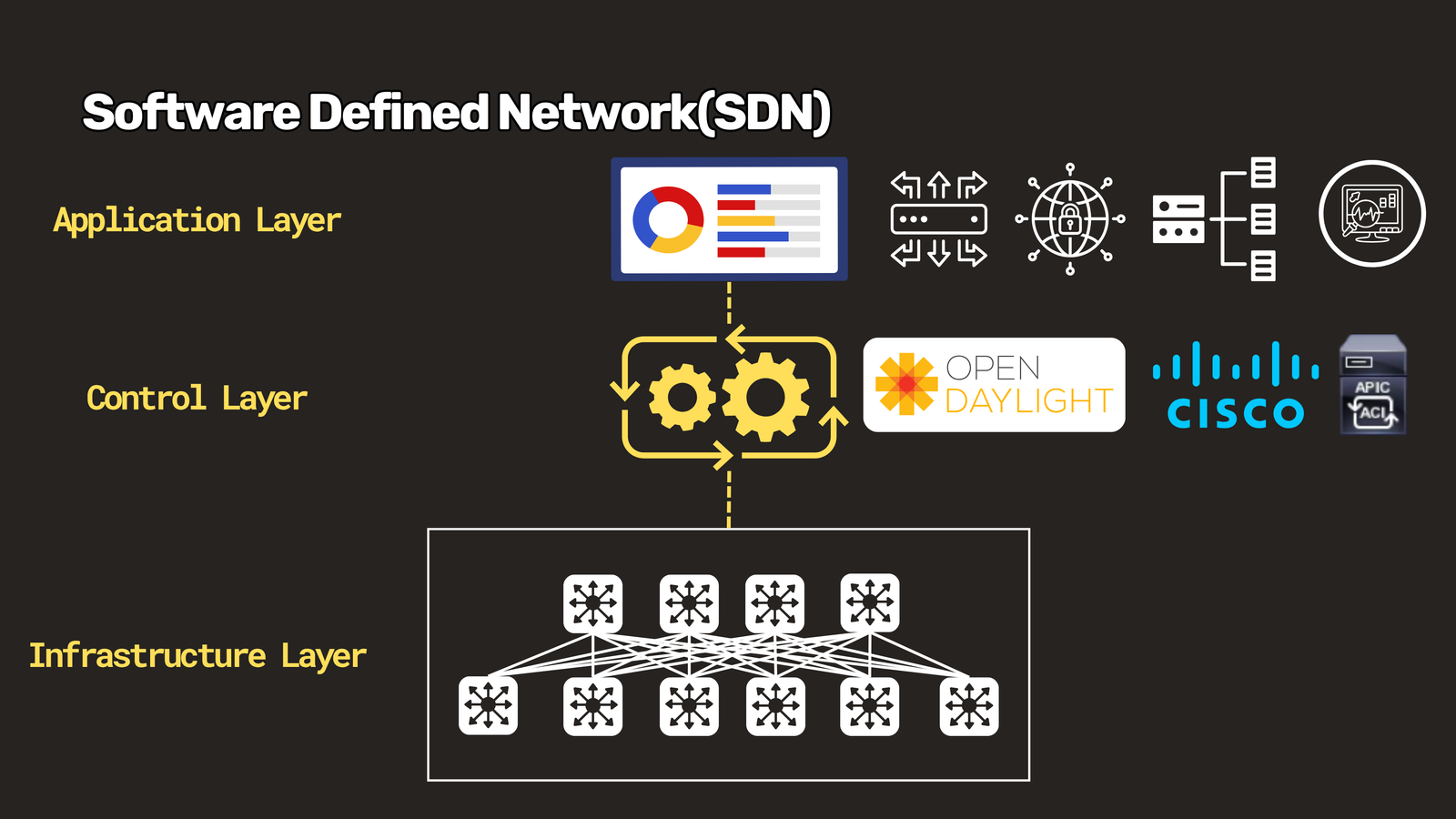
SDN architecture is built on three layers:
1. Infrastructure Layer
These are your routers and switches. In an SDN architecture, they become simple forwarders — devices that just follow the instructions they’re given, rather than making independent routing decisions.
2. Control Layer
This is the centralized SDN controller — the layer with a full view of the entire network. Examples include OpenDaylight and Cisco ACI’s APIC.
3. Application Layer
This is the software that tells the controller what it actually needs — things like routing policy, security rules, load balancing, and monitoring.
How SDN Works
So how does this actually function under the hood?
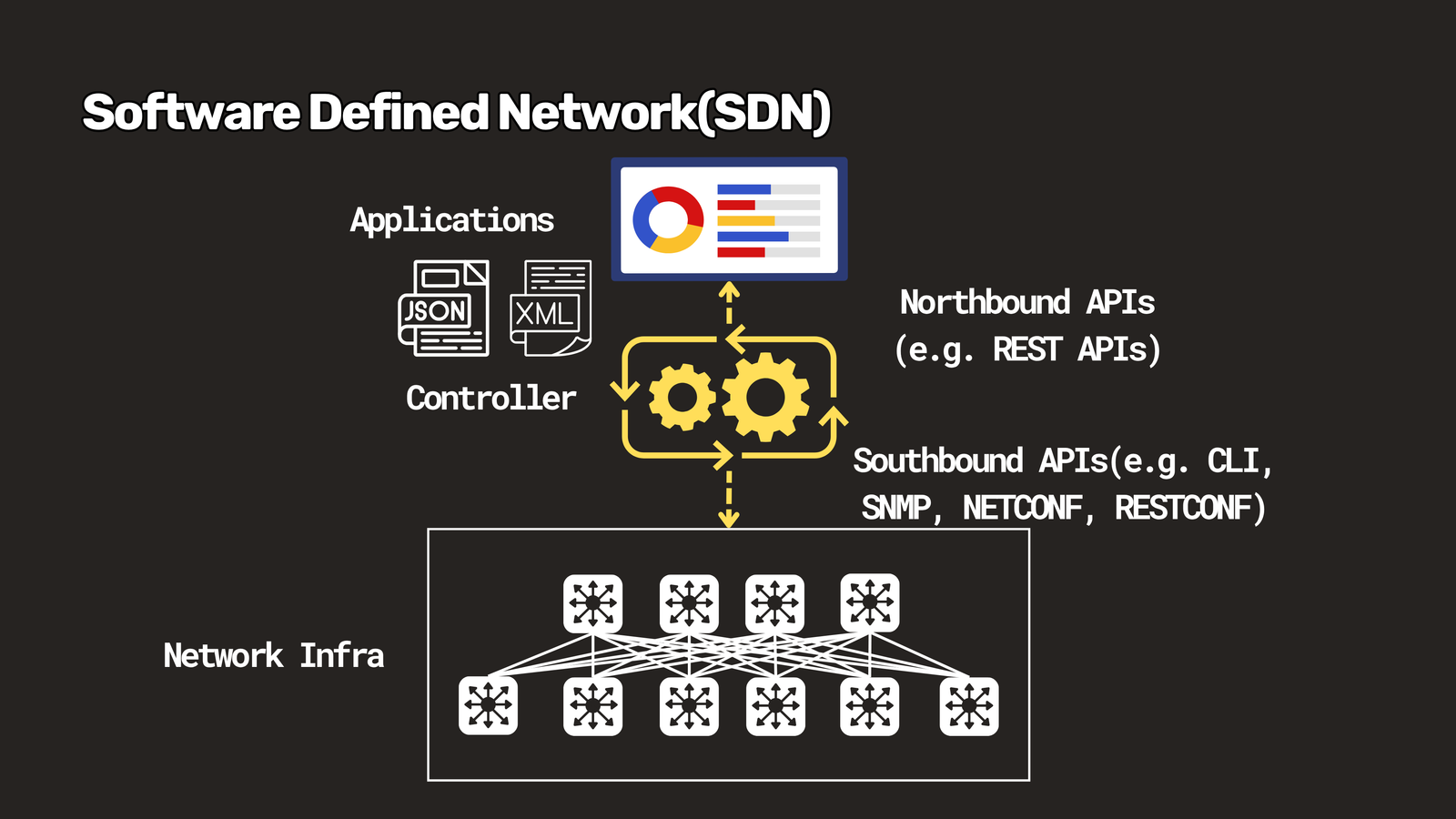
The controller connects down to the infrastructure layer using Southbound APIs. These can be traditional methods like CLI and SNMP, or newer protocols purpose-built for SDN, including:
- NETCONF
- RESTCONF
- OpenFlow
- OpFlex
Through these connections, information about the entire network is consolidated inside the controller.
That information is then made available to applications through Northbound APIs. These applications might handle monitoring, configuration management, or logging — and the Northbound API also gives you an interface for custom scripts to manage the network programmatically, typically using formats like JSON or XML.
The result: centralized monitoring and configuration for even large-scale networks, plus a foundation for orchestration — so your network can adapt as requirements change rapidly, instead of falling behind.
Where You’ll Find SDN in the Real World
SDN isn’t theoretical — it’s already running the infrastructure you use every day:
- Hyperscale data centers, managing traffic at massive scale
- SD-WAN, for connecting and managing branch offices
- Every major cloud provider’s network, under the hood
- Network Function Virtualization (NFV) deployments, where SDN pairs with virtualized firewalls and load balancers
Why It Matters
Software and systems engineering have become more agile with the rise of AI — and SDN has effectively prepared network engineers for that shift.
SDN gives networks an interface to keep up with changing requirements, sudden traffic bursts, and tight deployment deadlines. It paved the way for network automation, and it’s increasingly the bridge that allows AI to interact directly with the network layer.
SDN is the core idea — but if you want to go further, learning automation is what will really help the concept click.
Final Thoughts
SDN represents a fundamental shift in how networks are designed and operated — moving from device-by-device management to a centralized, programmable model. Whether you’re managing enterprise infrastructure, running a data center, or just starting to explore network automation, understanding SDN is a foundational step.
Have questions about SDN? Check out the video on this link https://youtu.be/czf88idsAt8, drop a comment and let’s discuss!